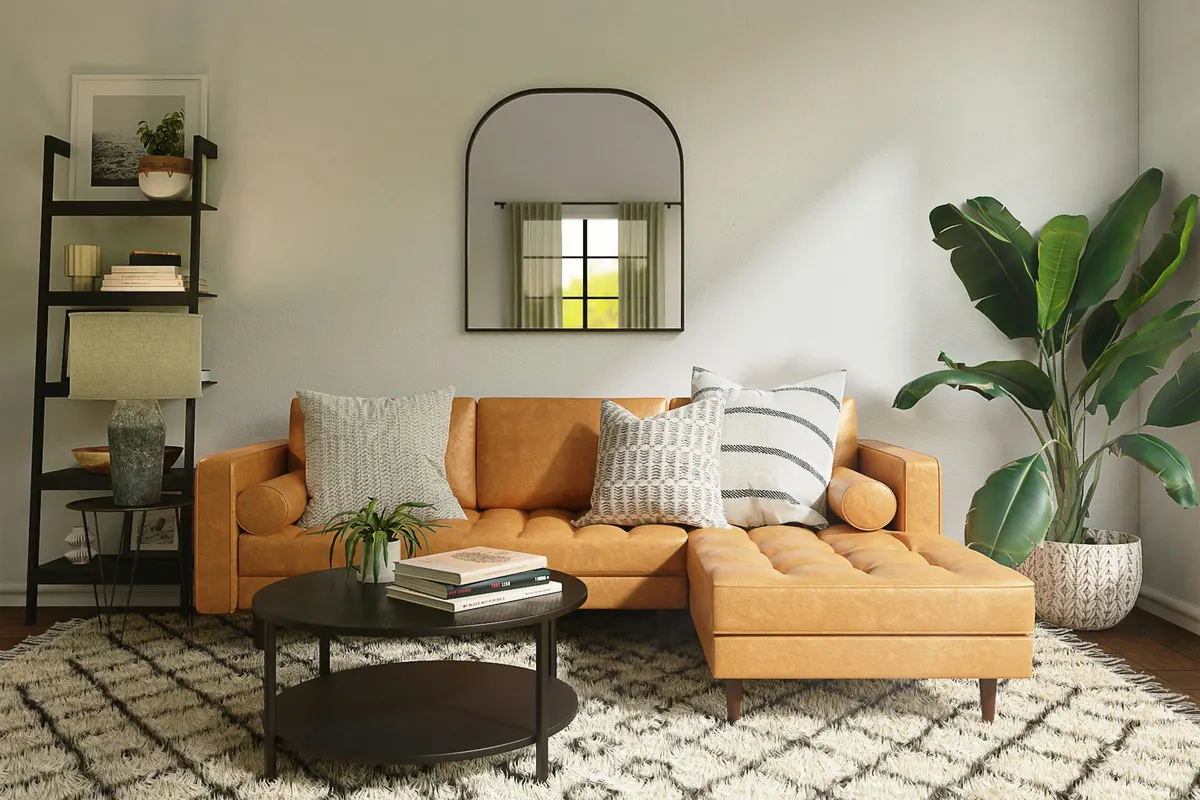
11:26A Saturday morning
The sofa is where it has always been. A book sits on the coffee table, the curtains are open, and the room looks perfectly familiar. Except for the rug.
You've been looking at it for several minutes, wondering whether it's too small, too large, or simply in the wrong place. It seemed right when you first laid it down. But now the sofa looks oddly separate from the coffee table, and the armchair seems to belong to another conversation entirely.
Perhaps you need a different rug. But before measuring anything new, there's a more useful question: what do you want the rug to connect?
The rug is not the starting point
A living room is where people sit, talk, read, walk through, put down their coffee and occasionally search for something that has disappeared between the cushions. The rug should support all of that.
It can gather the sofa and chairs into one seating area, define a zone within an open room, or bring texture beneath a favorite table. But it doesn't have to cover every inch of floor, and its size shouldn't be chosen apart from the furniture.
So begin with the seating you already have. Where is the sofa? Which chairs belong to the conversation? How do people move between them? Once those relationships are clear, the rug becomes much easier to understand.
Three ways to place a living room rug
Designers often use three broad approaches. None is an official rule. Each creates a different relationship between the rug, the furniture and the visible floor.
1. All furniture legs on the rug
The sofa, armchairs and coffee table sit entirely within the rug. The result feels like one complete seating area, which is particularly useful in a generous living room or an open-plan space where the furniture needs a visual center.
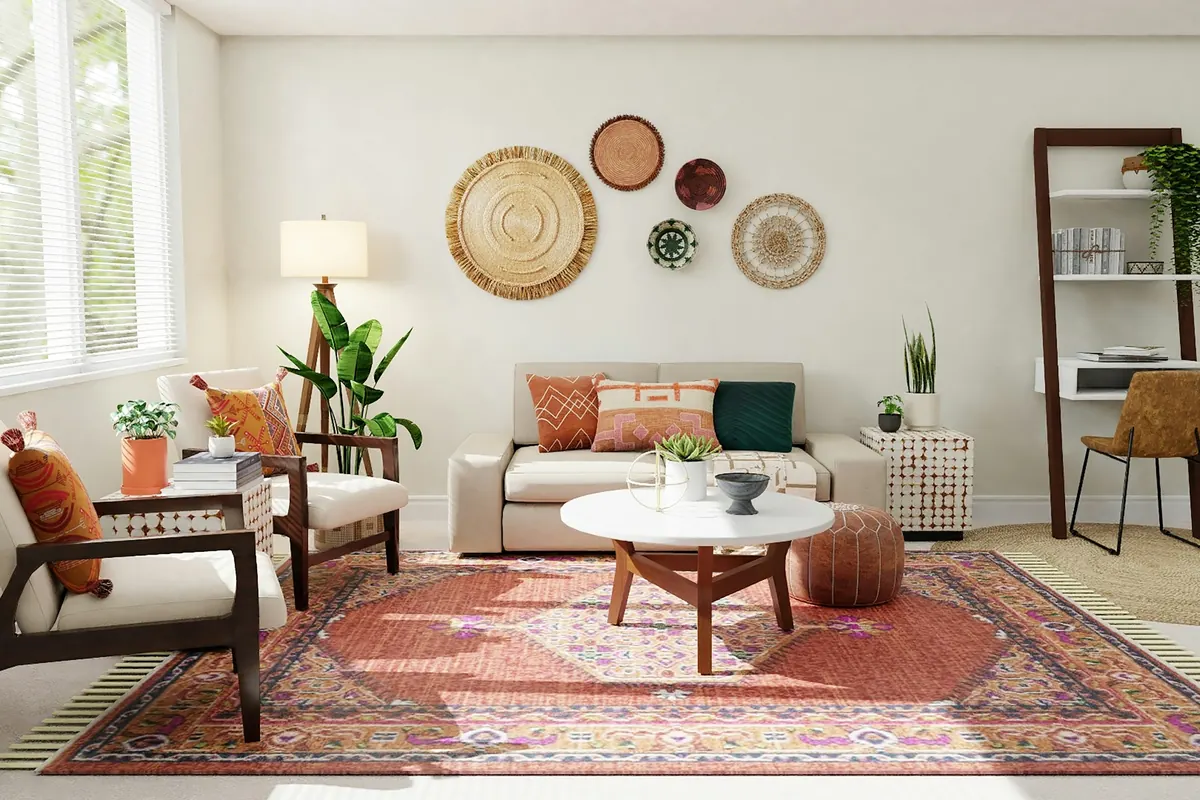
The rug should extend beyond the furniture rather than ending awkwardly beneath a few legs. But this approach needs space. Don't force a large rug into a compact room just because the arrangement looks appealing in a photograph.
2. Only the front legs on the rug
A flexible option for many living rooms. The front legs of the sofa and armchairs rest on the rug, while the back legs stay on the floor. It connects the group without needing a rug deep enough for every seat, and it works well when the sofa sits against a wall.
Include the front legs of all the main seats, rather than connecting only the sofa and leaving the chairs isolated. And check that everything stays steady: the goal is a connected seating group, not a collection of balancing acts.
3. Only the coffee table on the rug
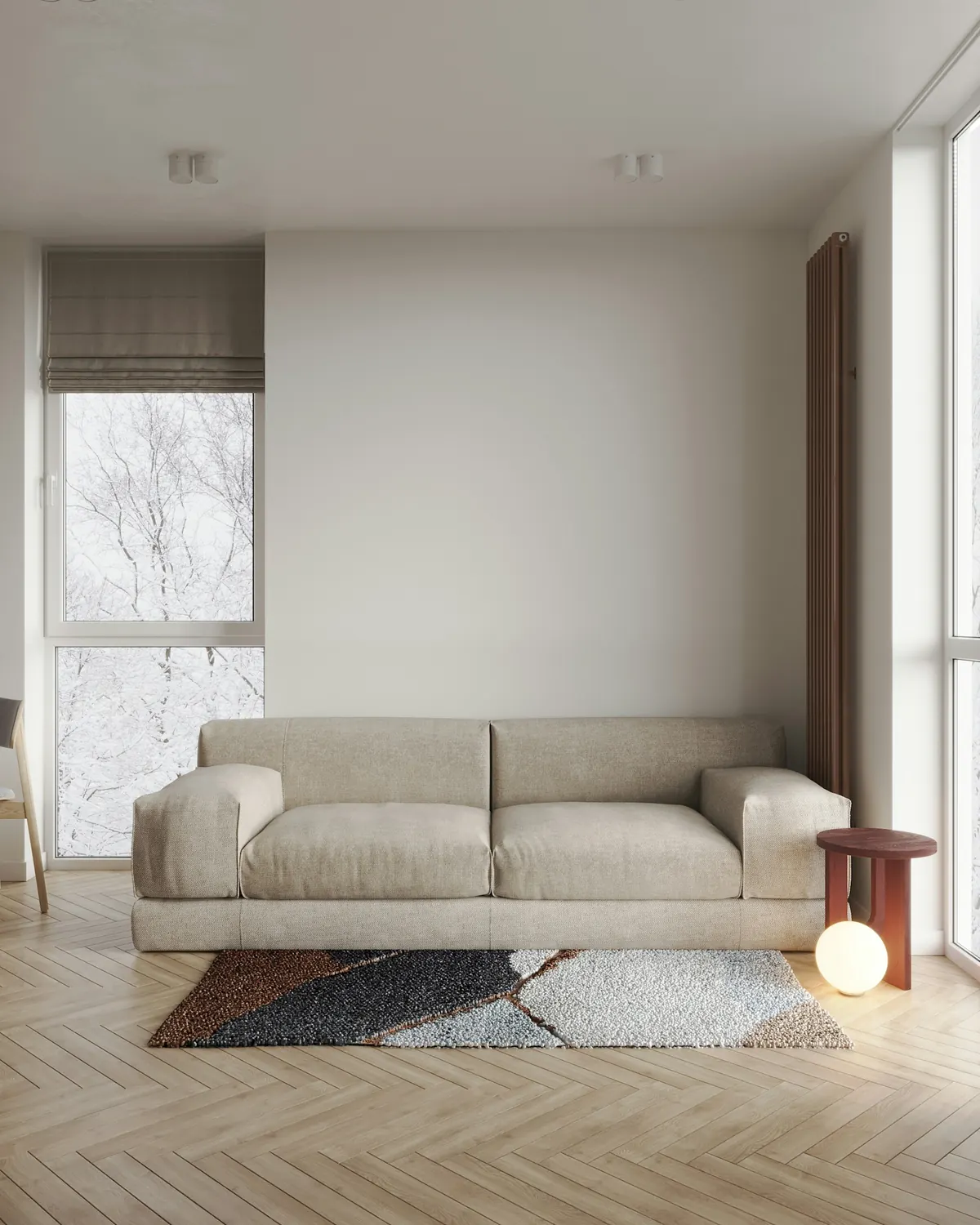
Useful in small or narrow rooms. The rug sits in the middle, beneath the coffee table, while the sofa and chairs stay off it.
Proportion matters here. If the rug looks like a tiny island far from the sofa, it can feel disconnected. In a compact seating arrangement, though, a smaller rug can look intentional when it fills enough of the central area. The question isn't whether you followed a rule. It's whether the rug seems to belong to the furniture around it.
A larger rug always makes a living room look bigger.
A generous rug can connect furniture, but bigger isn't automatically better. An oversized rug may crowd a small room or get in the way of doors and walkways. The right proportion depends on your layout and how you use the space.
How much floor should you leave showing?
Think of the visible floor as part of the composition. A little space around a rug makes its edges clearer, but not every room needs an identical border.
In a generous living room, about 1–1.5 ft (30–45 cm) of exposed floor around the edges is a useful starting point. In a compact apartment, less may work better. And in an open-plan room, the rug may be placed according to the seating group rather than centered between the walls. What matters is whether the floor, the rug and the furniture feel related.
What if your rug is round?
A round rug interrupts the straight lines of a rectangular sofa, table or room. It can work beneath a small circle of chairs, in a reading corner or as part of a deliberately asymmetrical layout.
But don't assume round is automatically better for a small room. If most of the rug disappears beneath a large coffee table, its shape will barely show. If the chairs sit too far from it, the arrangement can feel incomplete. Think about how much of the circle you actually want to see.
Can you layer two rugs?
Yes, as long as the combination is practical and stable. A smaller patterned rug can sit over a larger, simpler one: the lower rug defines the seating area, and the upper one brings a different texture or design.
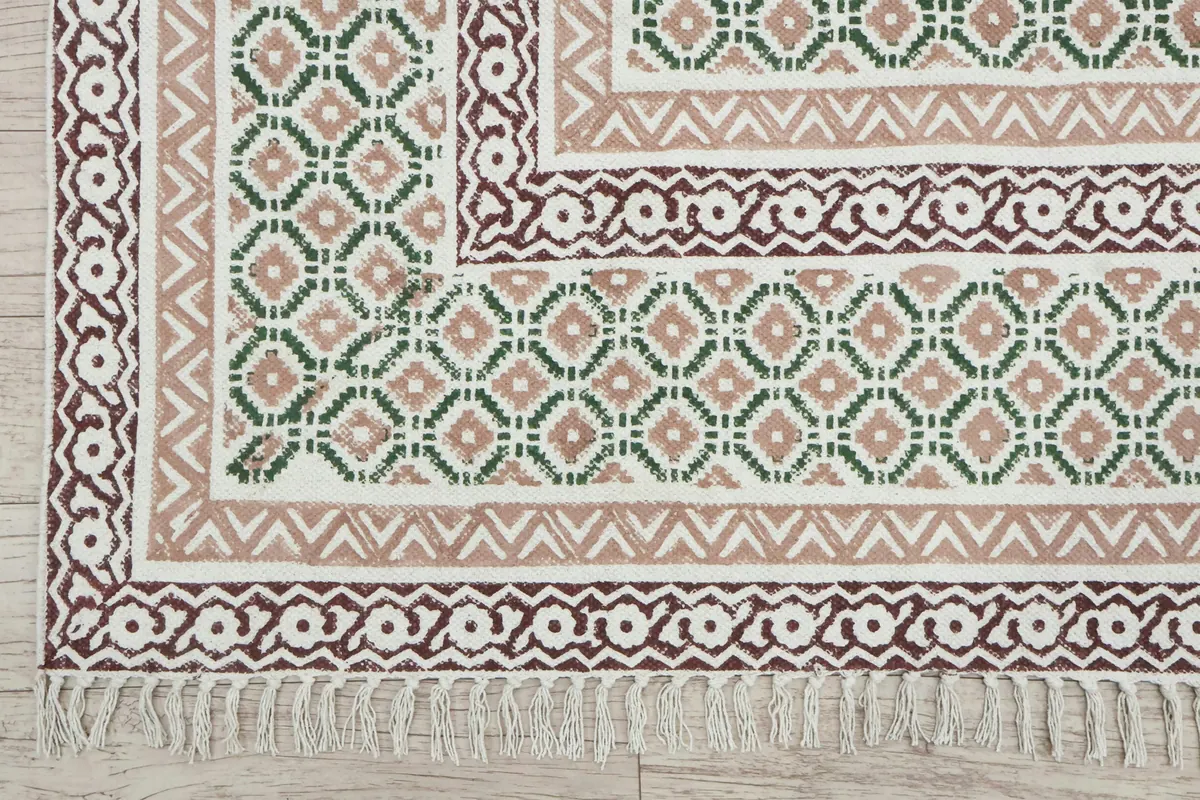
But layering isn't automatically more interesting, and a decorative rug may be perfect on its own. If two rugs create bulky edges, slide underfoot or become hard to clean, the idea isn't worth keeping. Make sure both lie flat and secure, with no loose edges that could cause trips. Sometimes one good rug is enough.
The painter's tape experiment
Before changing anything, see the size on your actual floor. Keep the furniture where it normally lives. Measure the area you want the rug to cover, then mark its corners and edges with painter's tape, only if your floor finish allows it. Test the tape somewhere discreet first and remove it promptly; on delicate floors, use your measurements and a paper plan instead.
Now stand in the doorway. Sit on the sofa. Walk toward the window. Does the outline connect the seating? Can you move comfortably? Would the rug catch on a door? Try another outline if you need to.
A rug shouldn't make the furniture obey it. It should help the room feel like one place to live.
The rug you already own
There's one more possibility. Perhaps the rug isn't wrong. Perhaps the coffee table needs to move slightly, the armchair belongs closer to the sofa, or the rug would work better turned the other way. Before replacing anything, try those small changes.
At the end of the day, the sofa is still familiar and the floor hasn't changed. But the seating area may finally feel connected. That's what good proportions do: they make the relationships between familiar things easier to read.
If you're exploring how to live better with limited square footage, read our guide to small spaces with big character. Because the best rug size isn't an abstract number. It's the one that makes sense for the life happening around it.
Sources & notes
- Original practical guide by ORIGIN. House Studio. No statistics, prices or product recommendations are included.
- The three placements are common interior-design approaches, not official rules. All distances are approximate visual starting points; feet come first, with approximate centimeters.
- Use painter's tape only on floors that allow it: test it somewhere discreet and remove it promptly. On delicate floors, use a tape measure and a paper plan instead.
- Photos (Unsplash License): Spacejoy, MKMHomes Craft, Spacejoy, Prydumano Design.
11:26Una mañana de sábado
El sofá está donde siempre. Hay un libro sobre la mesa de centro, las cortinas están abiertas y la sala se ve completamente familiar. Excepto por la alfombra.
Llevas varios minutos mirándola, intentando decidir si es demasiado pequeña, demasiado grande o si simplemente está mal colocada. Cuando la extendiste por primera vez parecía funcionar. Pero ahora el sofá se ve separado de la mesa de centro y el sillón parece formar parte de otra conversación.
Quizá necesitas una alfombra diferente. Pero antes de medir una nueva, hay una pregunta más útil: ¿qué quieres que conecte la alfombra?
La alfombra no es el punto de partida
Una sala es el lugar donde las personas se sientan, conversan, leen, pasan, apoyan el café y, de vez en cuando, buscan algo que desapareció entre los cojines. La alfombra debería acompañar todo eso.
Puede reunir el sofá y los sillones en una sola zona, delimitar un área dentro de un espacio abierto o aportar textura debajo de una mesa. Pero no necesita cubrir todo el suelo, y su tamaño no debería elegirse sin pensar en los muebles.
Así que empieza por la distribución que ya tienes. ¿Dónde está el sofá? ¿Qué sillones forman parte de la conversación? ¿Cómo se mueve la gente entre ellos? Cuando esas relaciones están claras, la alfombra es mucho más fácil de entender.
Tres maneras de colocar una alfombra en la sala
En decoración suelen usarse tres enfoques generales. Ninguno es una regla oficial. Cada uno crea una relación diferente entre la alfombra, los muebles y el suelo visible.
1. Todos los muebles sobre la alfombra
El sofá, los sillones y la mesa de centro quedan completamente dentro de la alfombra. El conjunto se siente como una zona de estar bien definida, algo especialmente útil en salas amplias o espacios abiertos donde los muebles necesitan un centro visual.
La alfombra debería extenderse más allá de los muebles, en lugar de terminar de forma incómoda debajo de algunas patas. Pero esta solución necesita espacio. No fuerces una alfombra grande en una sala pequeña solo porque la distribución se ve bonita en una fotografía.
2. Solo las patas delanteras sobre la alfombra
Una opción flexible para muchas salas. Las patas delanteras del sofá y de los sillones descansan sobre la alfombra, y las traseras quedan en el suelo. Conecta el conjunto sin necesitar una alfombra tan profunda como todos los asientos, y funciona bien cuando el sofá está contra una pared.
Incluye las patas delanteras de todos los asientos principales, en lugar de conectar solo el sofá y dejar los sillones aislados. Y comprueba que todo quede firme: la idea es un conjunto conectado, no una serie de equilibrios incómodos.
3. Solo la mesa de centro sobre la alfombra
Útil en salas pequeñas o estrechas. La alfombra queda en el centro, debajo de la mesa, mientras el sofá y los sillones quedan fuera.
Aquí las proporciones importan. Si la alfombra parece una isla diminuta lejos del sofá, puede verse desconectada. En una zona de estar compacta, en cambio, una alfombra menor puede verse intencional si ocupa una parte suficiente del centro. La pregunta no es si cumpliste una regla. Es si la alfombra parece pertenecer a los muebles que la rodean.
Una alfombra grande siempre hace que la sala parezca más amplia.
Una alfombra generosa puede conectar los muebles, pero más grande no siempre es mejor. Una pieza demasiado grande puede recargar una habitación pequeña o estorbar en puertas y pasos. La proporción adecuada depende de tu distribución y de cómo usas el espacio.
¿Cuánto suelo debería quedar a la vista?
Piensa en el suelo libre como parte de la composición. Una franja alrededor de la alfombra ayuda a definir sus bordes, pero no todas las habitaciones necesitan el mismo margen.
En una sala amplia, unos 30–45 cm (1–1.5 ft) de suelo visible son una buena referencia inicial. En un apartamento pequeño, quizá funcione mejor una separación menor. Y en un espacio abierto, puede tener más sentido centrar la alfombra respecto al grupo de asientos que respecto a las paredes. Lo importante es que el suelo, la alfombra y los muebles parezcan parte del mismo lugar.
¿Y si la alfombra es redonda?
Una alfombra redonda introduce otra forma entre las líneas rectas del sofá, la mesa y las paredes. Puede funcionar debajo de un pequeño grupo de sillones, en un rincón de lectura o en una distribución deliberadamente asimétrica.
Pero no supongas que una alfombra redonda siempre es mejor para una habitación pequeña. Si una mesa grande la tapa casi por completo, apenas verás su forma. Si los sillones quedan demasiado lejos, el conjunto puede sentirse incompleto. Piensa en cuánto círculo quieres dejar a la vista.
¿Se pueden superponer dos alfombras?
Sí, siempre que la combinación sea práctica y estable. Una alfombra pequeña con dibujo puede ir sobre otra más grande y sencilla: la de abajo define la zona de estar y la de arriba aporta otra textura o un motivo diferente.
Pero superponer no garantiza un resultado más interesante, y una alfombra decorativa puede funcionar perfectamente sola. Si los bordes quedan abultados, las alfombras se deslizan o cuesta limpiarlas, no vale la pena. Comprueba que ambas queden planas y firmes, sin bordes sueltos que provoquen tropiezos. A veces, una sola alfombra es suficiente.
El experimento con cinta de pintor
Antes de cambiar nada, mira el tamaño sobre tu suelo real. Deja los muebles en su lugar habitual. Mide el área que quieres cubrir y marca las esquinas y los bordes con cinta de pintor, solo si el acabado del suelo lo permite. Prueba antes la cinta en un lugar poco visible y retírala pronto; en suelos delicados, usa tus medidas y un plano en papel.
Ahora párate en la entrada. Siéntate en el sofá. Camina hacia la ventana. ¿El contorno conecta los asientos? ¿Puedes moverte con comodidad? ¿La alfombra se interpondría con alguna puerta? Si hace falta, prueba otro tamaño.
Una alfombra no debería obligar a los muebles a obedecerla. Debería ayudar a que la habitación se sienta como un solo lugar para vivir.
La alfombra que ya tienes
Queda otra posibilidad. Quizá la alfombra no está mal. Tal vez la mesa de centro necesita moverse un poco, el sillón debería estar más cerca del sofá o la alfombra funcionaría mejor girada. Antes de reemplazar nada, prueba esos pequeños cambios.
Al final del día, el sofá sigue siendo el mismo y el suelo no ha cambiado. Pero la zona de estar puede sentirse por fin conectada. Eso es lo que hacen las buenas proporciones: ayudan a entender mejor la relación entre las cosas que ya conocemos.
Si buscas maneras de vivir mejor en pocos metros, lee nuestra guía sobre espacios pequeños con mucha personalidad. Porque el mejor tamaño de alfombra no es una cifra abstracta. Es el que tiene sentido para la vida que sucede a su alrededor.
Fuentes y notas
- Guía práctica original de ORIGIN. House Studio. No incluye estadísticas, precios ni recomendaciones de productos.
- Las tres maneras de colocar la alfombra son pautas habituales de diseño, no reglas oficiales. Las distancias son orientaciones aproximadas, primero en centímetros y luego en pies.
- Usa cinta de pintor solo si el acabado del suelo lo permite: pruébala en un lugar poco visible y retírala pronto. En suelos delicados, mide con cinta métrica y dibuja un plano en papel.
- Fotos (licencia de Unsplash): Spacejoy, MKMHomes Craft, Spacejoy, Prydumano Design.